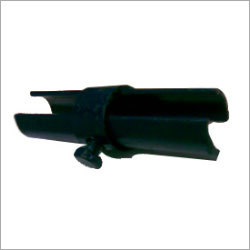
Scaffolding Couplers About
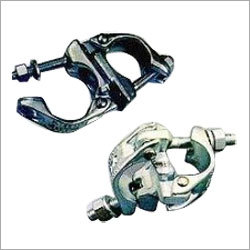
Backed with rich industry experience and knowledge, we are offering an excellent Scaffolding Couplers. This shuttering & scaffolding material is manufactured at our state-of-the-art unit using high grade raw materials sourced from reliable sources of the industry. The offered Scaffolding Couplers is valued for high strength, robustness and dimensional accuracy. This coupler is available in various specifications as per the needs of the clients.

Reliable Connection for ConstructionScaffolding couplers offer steadfast connections between scaffold pipes, ensuring safety and stability on construction sites. Their compatibility with 48.3 mm aluminum or steel tubes makes them ideal for a range of temporary structures, both indoors and outdoors. Each coupler undergoes rigorous conformity checks to BS1139/EN74, affirming their reliability across demanding site conditions.
Built for Durability and StrengthManufactured from high-grade steel and protected with galvanized or powder-coated finishes, these couplers display excellent corrosion resistance and high load-bearing capacity. Designed to be reusable, they cater to extended project timelines and repeated use, all while upholding their mechanical integrity and operational efficiency.
Easy Installation and MaintenanceWith a standard M12 x 55 mm bolt and a recommended tightening torque of 50 Nm, installation is straightforward and secure. Their robust design requires minimal maintenance and supports quick assembly and disassembly of scaffolding structures, streamlining your site processes. Detailed packaging ensures safe and organized delivery to your site.
FAQ's of Scaffolding Couplers:
Q: How do you properly install scaffolding couplers for secure connections?
A: To install scaffolding couplers, align them over the intersecting or joining section of two 48.3 mm tubes. Insert the M12 x 55 mm bolt and tighten it to the recommended torque of 50 Nm using a calibrated torque wrench. This ensures a secure, stable connection suitable for supporting standard scaffold loads.
Q: What types of scaffolding couplers are available, and where are they typically used?
A: The range includes swivel, right angle, and sleeve couplers. Swivel couplers join tubes at any angle, suitable for diagonal bracing. Right angle couplers connect tubes at 90 degrees for basic framework, while sleeve couplers securely join tube ends in continuous runs. These are essential in both indoor and outdoor construction applications.
Q: When should galvanized scaffolding couplers be chosen over powder-coated options?
A: Galvanized couplers should be selected when increased corrosion resistance is required, particularly for outdoor or humid environments. Powder-coated couplers are also corrosion-resistant and offer additional color-coding, but galvanized finish provides enhanced durability in harsh site conditions.
Q: What is the typical service life of these couplers, and what benefits does this offer?
A: Under standard usage conditions, these scaffolding couplers deliver a service life of over five years. Their long life and reusability contribute to reduced replacement costs, increase project safety, and provide consistent performance throughout multiple projects.
Q: Where can these couplers be used in terms of compatibility with different scaffold pipes?
A: These couplers are designed to be universally compatible with both steel and aluminum scaffolding tubes of 48.3 mm diameter, making them suitable for most standard scaffold systems used worldwide.
Q: What is the process for maintaining and reusing these couplers across projects?
A: After disassembly, inspect couplers for signs of wear, corrosion, or thread damage. Clean off any debris or residual concrete. Proper storage in dry conditions and periodic lubrication of bolts can maximize lifespan, ensuring they remain reliable and reusable across multiple projects.
Q: How does using these certified couplers benefit construction projects?
A: These certified couplers provide high strength, safety, and reliability, supporting maximum scaffold loads up to 6.25 kN. Their compliance with BS1139/EN74 ensures standardized quality and improved worker safety. Their durability and reuse potential help lower operational costs while maintaining structure integrity.